Home › Road, Street, and Municipal Paving
Precision Asphalt Charlotte handles road paving in Charlotte, NC for subdivisions, private communities, and municipal streets. Our crews manage milling, base work, and asphalt placement for new construction and resurfacing projects. We focus on proper grading, joint quality, and compaction so city streets and neighborhood roads deliver a smooth ride and long service life.
Precision Asphalt Charlotte provides professional road paving throughout Charlotte, NC, North Carolina and the surrounding area. Our licensed, insured crew delivers safe, clean, on-time work with a free estimate before anything begins. Call (704) 387-3626 or request your free quote.
Road Paving Services for Charlotte Communities
Road paving in Charlotte is not just about putting down blacktop. It is about building safe, smooth routes that hold up to Mecklenburg County traffic, heat, and heavy rain. Precision Asphalt Charlotte focuses on roads, streets, and municipal paving projects that serve real neighborhoods, schools, churches, and business districts.
We work with city agencies, HOAs, private developers, and facility managers across Charlotte, Huntersville, Matthews, and surrounding communities. Whether you are responsible for a subdivision loop, an industrial access road, or a city connector street, we design pavement that fits the traffic load and budget, then schedule work to keep your residents or customers moving.
Our team understands local ordinances, NCDOT standards, and Charlotte right of way requirements, which keeps your project compliant and avoids delays. From public bid work to privately funded street improvements, Precision Asphalt Charlotte handles the planning, permits, and pavement construction details so your project moves from design to completion with fewer surprises.
How Road, Street, and Municipal Paving Is Planned
Effective road paving in Charlotte starts with careful planning, not the first dump truck of asphalt. We begin every project with a site visit and pavement evaluation. For existing streets, we document cracking patterns, rutting, drainage problems, and base failures. For new roads, we evaluate soil conditions, curb layout, and planned traffic volumes.
Based on that assessment, we recommend a pavement structure, for example, a compacted stone base, asphalt base course, intermediate course, and surface course. For a light residential street, the surface mix and thickness will be different from an industrial route that sees concrete trucks and tractor trailers. We explain these options in clear terms so HOAs and municipal managers can see exactly what they are paying for.
We then coordinate with utilities and adjacent property owners. Scheduling around water line work, gas taps, or fiber optic installation avoids cutting a brand new road. Precision Asphalt Charlotte also reviews access needs. For example, when we pave near schools in Charlotte, we typically plan work around drop off and pickup times and sometimes split the project over weekends or school breaks to reduce disruption.
Step by Step: Our Road Paving Process
Once plans are approved, road paving follows a specific sequence to produce a smooth and durable result.
First is demolition and grading. For reconstruction, we mill or remove the existing asphalt to a set depth, then repair any soft or failed base. For new construction, we fine grade the subgrade, compact it to required density, and shape the crown and cross slope so water drains toward gutters or ditches.
Next, we install the stone base. We place graded aggregate base stone, shape it with motor graders, then compact it using vibratory rollers. We check elevations with lasers or stringlines so the final asphalt thickness is uniform. In Charlotte, where clay soils are common, we pay close attention to soft spots and undercut or stabilize them as needed.
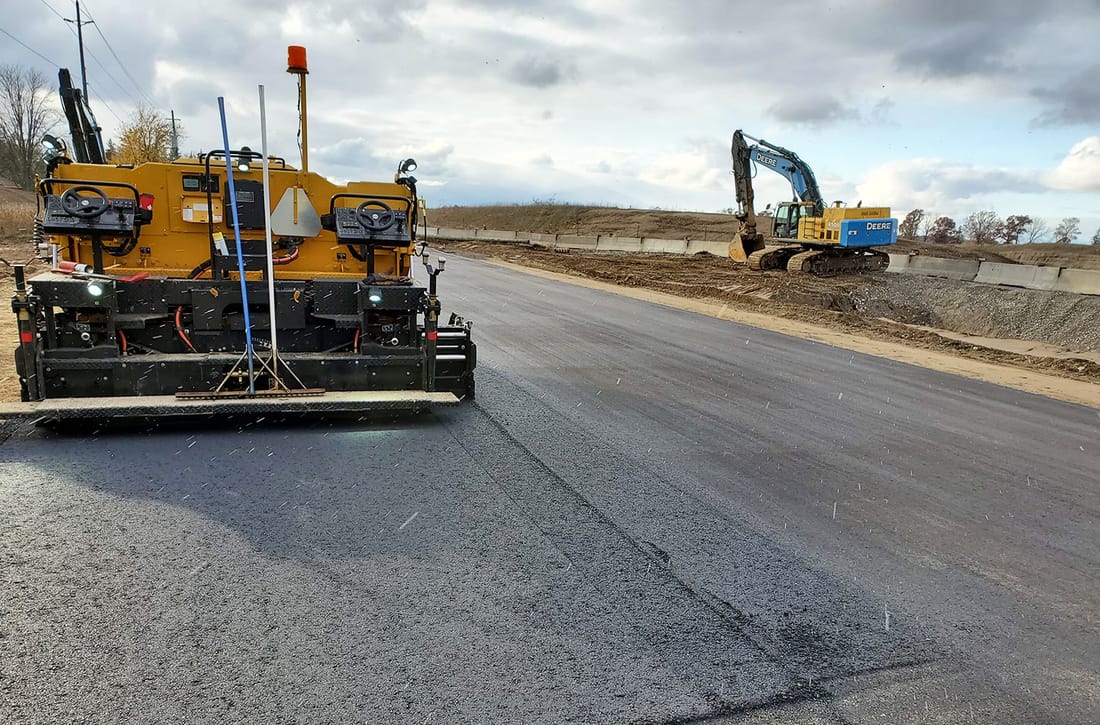
Then we pave the asphalt layers. For most streets, that includes an asphalt base course for strength, an intermediate leveling course if needed to correct roughness or ponding, and a surface course with a finer mix for a smooth riding finish. Our pavers use automatic grade and slope controls for even thickness, and our rollers follow a specific rolling pattern to lock in density without leaving marks or bumps.
Finally, we handle details like transitions to existing roadways, tie ins at driveways, and manhole and valve adjustments. We sawcut neat joints, seal them where appropriate, and make sure lids are set flush with the finished pavement. Once the asphalt has cooled and passed density checks, we complete striping, signage, and traffic control device installation so the road can be safely reopened.
Material Choices and Design Options for Charlotte Roads
Not every road needs the same asphalt mix or thickness. Precision Asphalt Charlotte helps you select materials that match your traffic and budget.
For residential streets and cul de sacs, we usually recommend a slightly finer surface mix that provides a smooth, quiet ride and good appearance. In heavier traffic areas, such as collector streets or industrial parks off Statesville Road or Westinghouse Boulevard, we often specify a stiffer mix with more stone and a thicker base to resist rutting from trucks and buses.
We can design full depth asphalt pavements or asphalt over aggregate base, depending on soil strength and project scope. For problem areas that see frequent utility cuts or turning movements, we may suggest thicker asphalt, geotextile reinforcement, or base stabilization to avoid repeated patching.
Charlotte weather also influences material choices. Hot summers and occasional winter freeze thaw cycles require mixes that resist both softening under heat and cracking in cold snaps. We use NCDOT approved asphalt mixes and adjust compaction and finishing practices around seasonal temperatures to get proper density without surface damage.
For municipal clients, we provide documentation on mix designs, density results, and core samples when needed, so you have a clear record that the road was built to spec.
What Drives the Cost of Road Paving in Charlotte
Road paving costs are driven by several factors, and understanding them helps Charlotte project managers budget realistically.
Project size and layout are the first drivers. Long, straight stretches of road are more efficient to pave than short, broken sections with frequent intersections and tie ins. Narrow streets that require extra traffic control or handwork around features can also increase the cost per square yard.
Existing conditions matter. If a street only needs milling and a new surface course, costs are lower than a full depth reconstruction with base repairs. Roads with severe alligator cracking, deep potholes, or pumping subgrade usually indicate base failure that must be corrected or the new asphalt will not last.
Access and traffic control add costs as well. Working on a quiet subdivision loop is different from paving near busy intersections like South Boulevard or Central Avenue, where we may need additional flaggers, detours, or night work. Coordinating with city traffic engineers and following MUTCD guidelines protects both the public and your budget by reducing incidents and rework.
Material prices, such as asphalt binder and aggregate, are tied to fuel and market conditions. Precision Asphalt Charlotte provides detailed, line item estimates that separate milling, base work, asphalt tonnage, striping, and traffic control so you can see where your funds are going and adjust scope if needed.
Common Road Problems in Charlotte and How We Fix Them
Local road issues tend to follow patterns, especially with our clay soils and summer storms. Recognizing the cause leads to the right repair instead of repeated patching.
Alligator cracking across lanes usually means the base or subgrade has failed, often due to water intrusion or inadequate thickness. In those spots, we cut out the damaged area, rebuild the base with compacted stone, and pave back in layers rather than just skin patching the top.
Rutting in wheel paths, common on bus or truck routes, often signals that the asphalt mix was too soft or too thin for the traffic. For these corridors, we mill the rutted surface, install a stiffer intermediate or base course, then cap it with a properly designed surface mix.
Standing water after storms is another frequent complaint in Charlotte neighborhoods. Sometimes it is a simple leveling issue, fixed by milling high spots and placing a thin leveling course before resurfacing. Other times, the curb line or gutter was never set at the correct grade. We use laser or stringline checking to identify low areas and adjust the design so runoff moves to inlets instead of sitting in front of driveways.
For municipal maintenance teams, we can prioritize repairs based on severity, traffic volume, and risk, then plan phased paving programs that fit fiscal year budgets while steadily improving overall pavement condition.
Why Charlotte Agencies and HOAs Choose Precision Asphalt Charlotte
Public and private street work affects entire neighborhoods, so choosing a contractor who respects the community is just as important as choosing one with the right equipment. Precision Asphalt Charlotte is locally focused. Our crews live in and around Charlotte, and we understand that a paving project is happening in front of someone’s home, school, or workplace.
We coordinate signage, door hangers, and notices so residents know when streets will be closed or when vehicles need to be moved. On municipal routes, we work with city staff to schedule around peak traffic, garbage collection, and events. For HOAs, we often stage projects in sections so homeowners always have a way in and out.
Quality control is built into every road paving job. We monitor temperatures of delivered asphalt, check compaction with appropriate rollers, and inspect joints and transitions before opening a road to traffic. When a project calls for cores or density testing, we arrange that as part of our service and provide the reports.
If you are planning a road, street, or municipal paving project in Charlotte or nearby communities, Precision Asphalt Charlotte can help you evaluate options, set priorities, and build a pavement that serves your community for years with minimal disruption.