Home › Road, Street, and Municipal Paving
Partner with a dependable contractor for road, street, and municipal paving in Charlotte, NC. We construct new asphalt roads, resurface existing streets, and complete repair projects on schedule. Our experienced team manages traffic control, compaction, and quality testing to meet public standards.
Precision Asphalt Charlotte provides professional road paving throughout Charlotte, NC, North Carolina and the surrounding area. Our licensed, insured crew delivers safe, clean, on-time work with a free estimate before anything begins. Call (704) 387-3626 or request your free quote.
Road Paving for Charlotte Communities
Precision Asphalt Charlotte focuses on road, street, and municipal paving that matches how Charlotte actually lives and moves. Whether you manage a subdivision off Harris Boulevard, a city street near South End, or a private road that needs to meet municipal standards, we plan the work around your traffic patterns, school zones, bus routes, and weather windows.
Our team is used to working with HOAs, facility managers, and municipal staff across Mecklenburg County. We understand you are balancing safety, budgets, and public feedback. That is why we explain options in plain language, provide phased plans when needed, and schedule construction to limit disruption to residents, businesses, and emergency access.
Every project starts locally. We look at your soil, utilities, drainage, and existing pavement instead of applying a one-size-fits-all spec from another region. Roads that see heavy truck traffic near warehouse corridors like Statesville Road need a very different design than a low-speed neighborhood loop in Ballantyne. Our goal is a pavement structure that fits your exact use, so it performs well through Charlotte heat, summer thunderstorms, and occasional winter freezes.
How We Evaluate Existing Streets and Roads
Effective road paving in Charlotte starts with understanding what is already in the ground. Before we propose a solution, Precision Asphalt Charlotte performs a site evaluation that usually includes core sampling, visual distress mapping, and drainage review.
Core sampling tells us how thick the existing asphalt and stone base are, and whether the subgrade has moisture or stability problems. This matters because a simple mill and overlay might be enough on a well built road, while a road that was originally underbuilt for current traffic may require full-depth reclamation or reconstruction.
We map surface issues such as alligator cracking, rutting in wheel paths, potholes, and edge failures. For example, rutting is common on bus routes and trucking corridors in Charlotte, especially where summer heat softens old mixes. Longitudinal cracks along the edge of the pavement often indicate base or shoulder support problems.
Drainage is a major factor in this region. We check gutter lines, cross slopes, and low spots where water consistently stands after storms. Many older Charlotte neighborhoods have flat streets with insufficient cross-slope, which allows water to sit and accelerate cracking and raveling. By documenting these conditions upfront, we can design a paving scope that actually addresses the root causes instead of just covering them up.
Pavement Design, Materials, and Mix Choices
Once we understand conditions and traffic loads, we design a pavement structure that is appropriate for your street or road. Precision Asphalt Charlotte works with a combination of full-depth asphalt, stone base courses, and when appropriate, soil stabilization to reach the target strength.
For local residential streets, we often use a compacted stone base with one or two asphalt layers, such as a thicker binder course for strength followed by a finer surface course that gives a smooth ride and clean look. Collector roads and routes with buses or delivery trucks may need a thicker asphalt section, higher quality aggregate, or modified asphalt binder to resist rutting during hot Charlotte summers.
We select mix designs available from local plants in and around Charlotte, which helps control cost and allows us to meet NCDOT and City of Charlotte standards when required. Open-graded surface mixes can be considered for specific applications to improve surface drainage, while dense-graded mixes are common for most municipal work due to durability and easier maintenance.
We also talk through curb and gutter interfaces, tie-ins at manholes and water valves, and transitions to existing asphalt or concrete. Getting those details right is what prevents trip hazards, standing water along the gutter, and premature cracking at patch boundaries.
Step-by-Step Road and Street Paving Process
Our road paving process is structured to keep traffic moving as safely as possible while delivering a long-lasting surface.
1. Planning and traffic control: We coordinate with you to identify peak traffic times, school bus schedules, deliveries, and special events. Then we develop a traffic control plan with signage, cones, flaggers, and lane closure sequences that meet local requirements.
2. Milling or excavation: On resurfacing projects we use cold milling machines to remove a precise depth of existing asphalt. This helps correct cross slope, remove ruts, and maintain curb reveal. On failing or underbuilt roads we may excavate deeper to rebuild the stone base or stabilize the subgrade.
3. Base repair and strengthening: Soft spots are repaired by undercutting and replacing saturated or weak material with compacted stone or, in some cases, cement or lime stabilization. In Charlotte, we often see localized base failures near drainage inlets or older utility trenches, so we pay special attention to those areas.
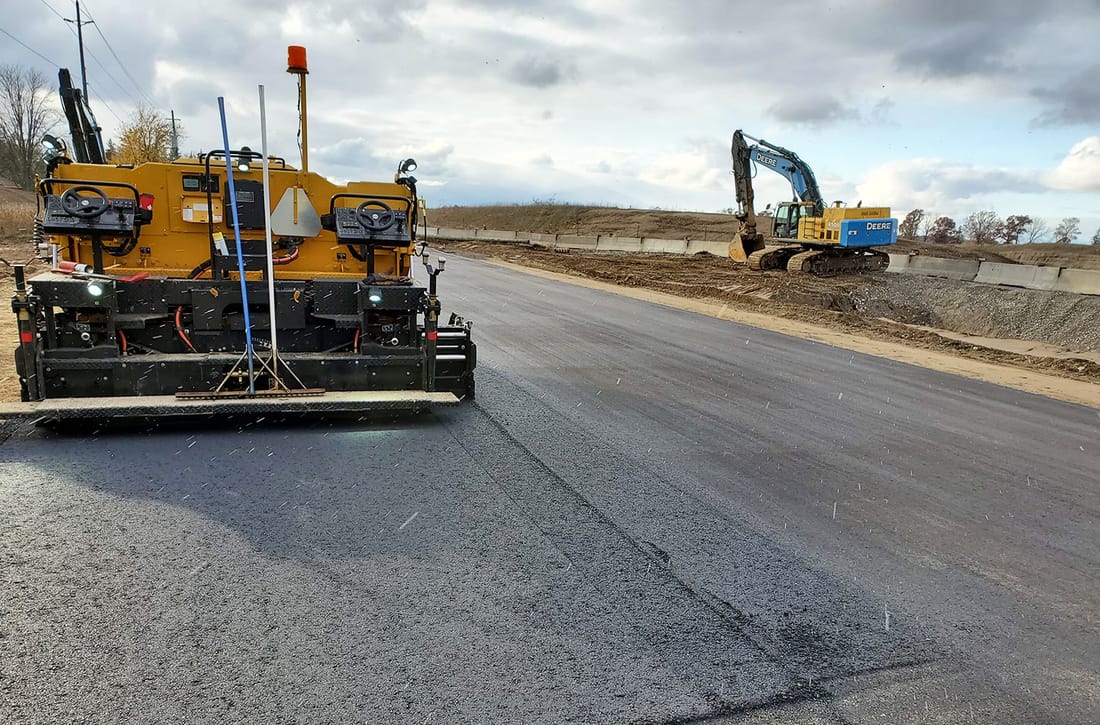
4. Placement of new asphalt layers: Asphalt is delivered from the plant, placed with a paver, then compacted using rollers in a specific pattern to achieve target density. We monitor mix temperature at delivery and during placement because overly cool material will not compact properly, especially on night work.
5. Joints and tie-ins: We carefully construct longitudinal and transverse joints so traffic does not feel ridges and so water cannot easily enter the pavement at seams. Tie-ins at intersecting streets and driveways are feathered to eliminate abrupt changes in elevation.
6. Striping and markings: After proper cooling and curing, we install pavement markings, crosswalks, stop bars, and symbols that meet local codes and your specific needs. For municipal projects we follow MUTCD and any additional city standards.
7. Final walkthrough and documentation: We walk the project with you, address any punch list items, and provide information on maintenance expectations so you know what to plan for over the life of the pavement.
What Drives Road Paving Cost in Charlotte
Road paving budgets are heavily influenced by existing conditions and required performance, not just the visible length of the street. Precision Asphalt Charlotte explains these cost drivers upfront so you can make informed decisions or phase work if necessary.
Depth of repair is usually the biggest factor. A simple mill and 1.5 to 2 inch overlay on a sound base is far less expensive than a full-depth reconstruction that involves undercutting, new stone base, and multiple new asphalt lifts. Traffic volume and truck percentage also influence how thick we must build the pavement to meet a realistic service life.
Access and traffic control can add cost if the project is on a high volume route, near an interstate ramp, or in a dense urban area like Uptown or South End, where lane closure windows are constrained. Night work, while sometimes necessary, can also increase cost because of lighting, crew scheduling, and plant operations.
Drainage improvements are another cost factor. In many older Charlotte neighborhoods, minor changes to cross slope or spot leveling of gutters can significantly extend pavement life, but they do require careful grading and sometimes extra milling or wedging.
Finally, material pricing and project timing matter. Summer is peak season for asphalt in the region. Larger projects scheduled with enough lead time often qualify for better unit pricing because we can sequence work efficiently and work with plants on production scheduling.
Common Road Problems We Solve in Charlotte
Local roads and streets around Charlotte share a set of recurring issues that we address in our designs and construction methods.
Rutting in wheel paths is common on bus routes and on roads serving distribution centers. We combat this by using mixes with higher quality aggregate, appropriate binder grades for our climate, and sufficient pavement thickness based on traffic projections.
Alligator cracking and potholes show up where the base or subgrade has weakened, often due to chronic moisture. Instead of repeatedly patching the surface, we identify these failure zones during evaluation and repair the structure beneath, whether that means undercut, stabilization, or thicker base courses.
Edge failures and crumbling shoulders are frequent on narrow subdivision roads and older rural streets where vehicles regularly drive off the pavement edge. To reduce this, we can widen the paved area slightly, improve shoulder support, and construct stronger edge joints.
Poor drainage and standing water not only damage pavement but also create safety hazards. We adjust cross slopes where feasible, correct birdbaths through milling and leveling courses, and ensure inlets remain accessible after paving. In locations that frequently flood during heavy summer storms, we coordinate with owners to look at broader drainage improvements alongside pavement work.
For municipal clients, we also help with ADA-related issues at crosswalks, ramps, and intersections when paving work alters grades, so that improvements meet both performance and accessibility goals.
Working With Precision Asphalt Charlotte on Your Project
When you hire Precision Asphalt Charlotte for road paving, street resurfacing, or municipal improvements, you get a partner that understands the mix of technical requirements and community expectations.
We are familiar with local standards and can tailor our work to fit NCDOT and City of Charlotte specifications, HOA guidelines, or private facility needs. For HOAs and property managers, we can prepare clear diagrams and phasing plans that you can share with residents, along with sample notices that explain parking changes and access routes during construction.
Communication is a central part of how we operate. Before we mobilize, you will know which sections will be worked on each day, what access will look like during and after hours, and how weather delays will be handled. During construction, our superintendent remains available for on-site questions and coordination.
We also help you think beyond the current project. If your road network has multiple sections with different levels of deterioration, we can map them, prioritize the worst areas, and create a multi-year paving plan. This allows you to spread cost over time while reducing the chance of sudden failures.
If you manage roads, streets, or municipal facilities anywhere in the Charlotte, NC area and need a clear, practical plan for road paving, we can review your network, explain your options, and provide a detailed proposal that fits your schedule and budget.