Home › Industrial and Heavy-Duty Asphalt Paving
Precision Asphalt Charlotte provides industrial asphalt paving in Charlotte, NC for truck yards, loading docks, factories, and distribution centers. We design heavy duty asphalt sections with proper thickness, base, and mix design to handle frequent truck traffic and turning loads. Our heavy duty asphalt paving solutions reduce rutting and failures, keeping your operations running smoothly.
Precision Asphalt Charlotte provides professional industrial asphalt paving throughout Charlotte, NC, North Carolina and the surrounding area. Our licensed, insured crew delivers safe, clean, on-time work with a free estimate before anything begins. Call (704) 387-3626 or request your free quote.

Industrial Asphalt Paving for High-Traffic Facilities in Charlotte
Industrial and heavy-duty asphalt paving is not the same as paving a driveway or small parking lot. At Precision Asphalt Charlotte, we design and build pavement structures that stand up to constant truck traffic, forklifts, loaded trailers, and turning movements that grind weaker pavements apart.
We work across the Charlotte, NC region on distribution centers, manufacturing plants, logistics yards, utility facilities, waste transfer stations, and heavy equipment storage sites. The goal is always the same: a pavement section that performs under real loads and local conditions, not just one that looks good on opening day.
From subgrade stabilization in Piedmont clay to selecting the right heavy-duty asphalt mix at the plant, every decision affects how long your pavement will last and how often you will have to shut down operations for repairs. Our team focuses on getting those details right from the start so your facility can stay productive and safe.
How Industrial Asphalt Pavements Are Built to Handle Heavy Loads
For industrial asphalt paving, we start with a pavement design that fits your exact loading conditions. That means looking at your truck counts, axle weights, turning zones, dock areas, and any static load areas such as container storage. We use those inputs, along with soil data, to establish the proper thicknesses for the subbase, base, and asphalt layers.
A typical heavy-duty section in Charlotte might start with 6 to 12 inches of compacted aggregate base on top of a stabilized subgrade, followed by multiple asphalt lifts. In loading dock areas or truck aprons, we often specify thicker base and surface courses, or use a high performance asphalt mix with a harder binder and more crushed aggregate. The truck paths get different designs than employee parking or car traffic areas, so you are not overpaying for strength where you do not need it.
For clients that already have concrete in critical spots, we design asphalt tie-ins that handle the transition without creating bumps or early cracking. Every project at Precision Asphalt Charlotte is engineered around the real forces your pavement will see, not a one size fits all template.
Step-by-Step Process: From Evaluation to Final Rollers
Our industrial asphalt paving work in Charlotte follows a clear, field-tested sequence so your site stays organized and predictable.
1. Site evaluation and measuring: We walk the property with you, review your traffic patterns, drainage paths, and problem spots like rutting or ponding. We shoot grades if needed and locate utilities so there are no surprises during excavation.
2. Soil and base preparation: If the existing subgrade is soft or contains organics, we undercut and replace or stabilize it using aggregate, cement, or lime treatment depending on conditions. We then install and compact aggregate base in layers, testing density regularly with a nuclear gauge or plate tests to verify it meets spec.
3. Fine grading and drainage shaping: Before any asphalt is placed, we shape the base to the planned slopes so water moves to drains, inlets, or swales. For industrial sites with large flat areas, we pay close attention to cross slopes and long surface drains to avoid standing water that can break down asphalt under heavy loads.
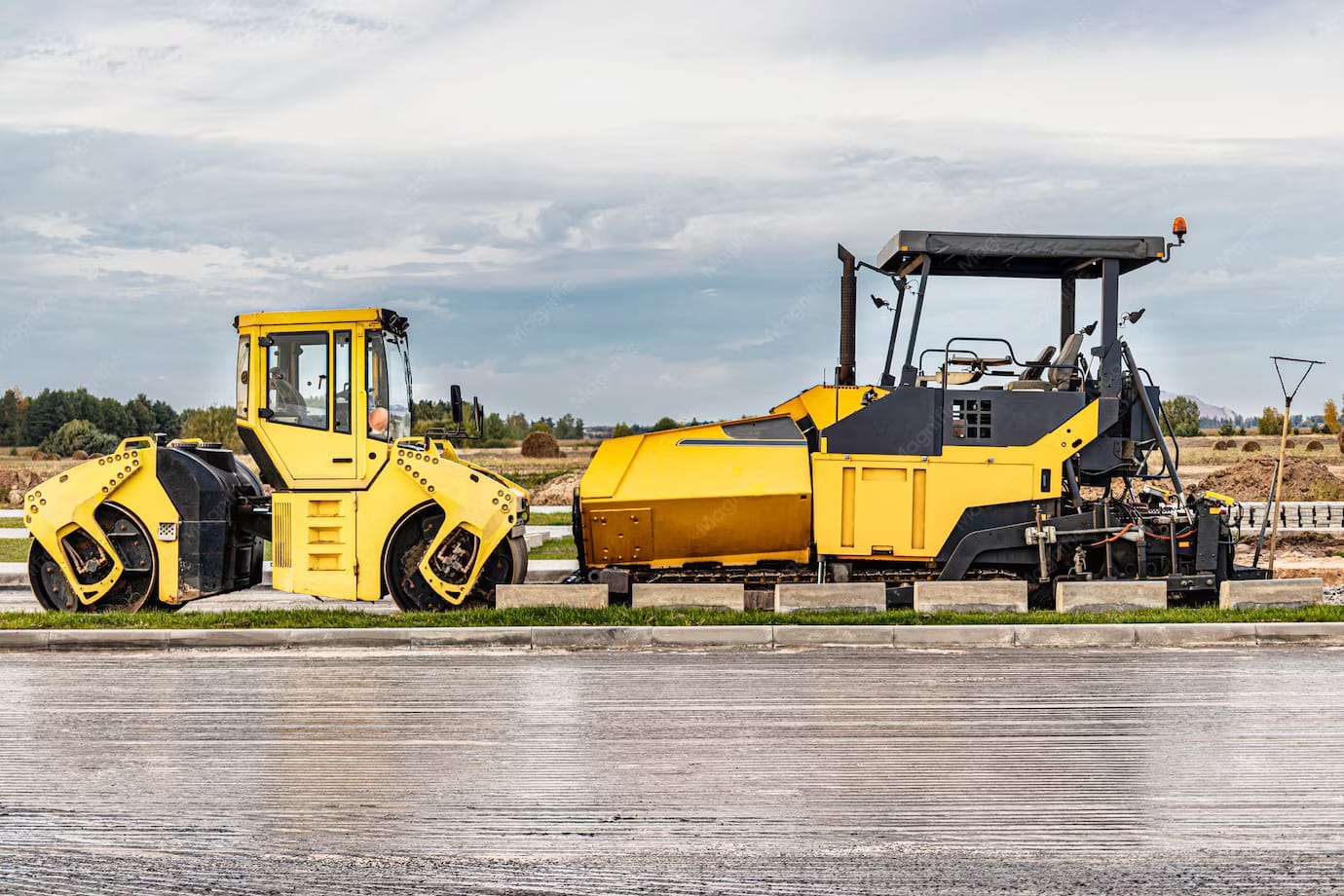
4. Asphalt placement in lifts: We pave in multiple lifts using commercial pavers, not just skid steers. Each lift is laid at a controlled temperature, then compacted with steel drum and pneumatic rubber tire rollers to achieve target density. Truck aprons and turning zones usually get extra passes to lock in the mix.
5. Joint and edge treatment: Longitudinal and transverse joints are matched tightly so there are no weak seams. Edges that are not confined by concrete are properly backed and compacted to prevent unraveling.
6. Striping, signage, and safety setup: Once the surface cools and cures, we add striping, dock markings, stop bars, and any pedestrian pathways. For active facilities, we can phase this work so parts of your yard or dock line stay open during construction.
Material Choices for Heavy-Duty Asphalt in Charlotte
Industrial asphalt paving is as much about material selection as it is about thickness. Precision Asphalt Charlotte works closely with local asphalt plants to specify mixes that match your use and the seasonal conditions in Mecklenburg County.
For heavy truck areas, we typically use a dense graded base mix with a high percentage of crushed aggregate, topped with a surface mix that has a tougher binder and stone size selected for the type of traffic. In some cases, we recommend polymer modified asphalt binders in high stress zones like tight turning areas or steep grades near docks.
We also consider nighttime versus daytime placement, especially in Charlotte summers. High pavement temperatures affect compaction windows and final density. We schedule heavy-duty lifts during cooler parts of the day when necessary so rollers have enough time to achieve target density before the asphalt cools.
If your industrial yard needs future reconfiguration, we can design the surface course with a maintenance strategy in mind. For example, we might use a thicker surface lift that can handle future mill and overlay cycles without ever cutting into the heavy base structure, which reduces downtime and long term cost.
Permitting, Compliance, and Local Considerations in Charlotte, NC
Industrial asphalt paving in Charlotte typically involves coordination with local authorities and sometimes state agencies, depending on your facility and location. Precision Asphalt Charlotte helps you navigate the steps that affect paving scopes and timelines.
Within Charlotte city limits, many larger industrial projects require grading or land development approvals, particularly if drainage, detention ponds, or connections to public streets are involved. We work with your civil engineer or site designer to ensure the pavement design aligns with the approved plans, including fire lane specifications, turning radii for emergency vehicles, and access road strength.
If your site connects directly to NCDOT maintained roads, we follow North Carolina Department of Transportation standards for tie-ins and any required encroachment permits. That can mean specific base and asphalt thicknesses, as well as detailed compaction and inspection requirements.
Industrial parks with their own covenants sometimes require specific pavement finishes, striping patterns, or truck routing. We can review your park rules and incorporate them into the paving plan so you remain in compliance and avoid issues with property managers or HOAs.
Cost Drivers and How to Control Your Industrial Paving Budget
Heavy-duty asphalt paving costs are driven by more than just square footage. For industrial clients around Charlotte, the largest variables are subgrade conditions, required pavement thickness, phasing needs, and access.
If your existing yard has areas of pumping, rutting, or severe cracking, we often find weak subgrade or inadequate base below. Correcting that can involve deeper excavation, more aggregate, or chemical stabilization, which impacts cost but pays off in performance. We can provide separate pricing options that compare minimal removal with full depth reconstruction so you can see the life cycle cost difference.
Pavement thickness is directly tied to truck volumes and axle loads. A yard that sees a few deliveries per day needs a different section than a 24 hour cross dock facility with loaded semis constantly cycling through. We design to your measured or projected traffic so you are not overbuilding light use areas.
Operational constraints, such as keeping docks open or maintaining emergency access, can require night work, multiple phases, or temporary pavement. We plan these details with your team so you can decide where it makes financial sense to phase work and where a full closure for a short period is the better option.
By walking the site with you and understanding how your operation flows, Precision Asphalt Charlotte can often suggest minor layout changes or reinforcement in key zones that save you money in long term maintenance.
Maintenance, Repairs, and Long-Term Performance Planning
A heavy-duty pavement that is not maintained on a schedule will fail early, even if it was built correctly. For industrial sites, the wear patterns are predictable. Truck scales, tight turns, braking zones near docks, and container storage areas are usually the first to show distress.
We recommend a maintenance plan that starts with regular visual inspections, especially after winter freeze thaw cycles and heavy rain events. Issues like early rutting, reflective cracking, or flushing can be identified before they become failures. Precision Asphalt Charlotte can perform infrared spot repairs, localized mill and inlay, or full depth patching only where the structure has been compromised.
For large industrial facilities, periodic mill and overlay is often the most efficient way to extend pavement life without disrupting the entire operation. We remove a planned depth of surface, correct any isolated base failures, and install a new wearing course designed for heavy traffic. This approach keeps your base and subbase investment intact.
We also review drainage performance during maintenance visits. If catch basins are clogged or slopes have changed due to settlement, we address those issues as part of the repair scope rather than treating only the surface symptoms. A long-term pavement management plan, tailored to the actual loads and conditions at your Charlotte facility, will always cost less than reacting to emergencies one failure at a time.