Home › Commercial Gravel-to-Asphalt Conversions
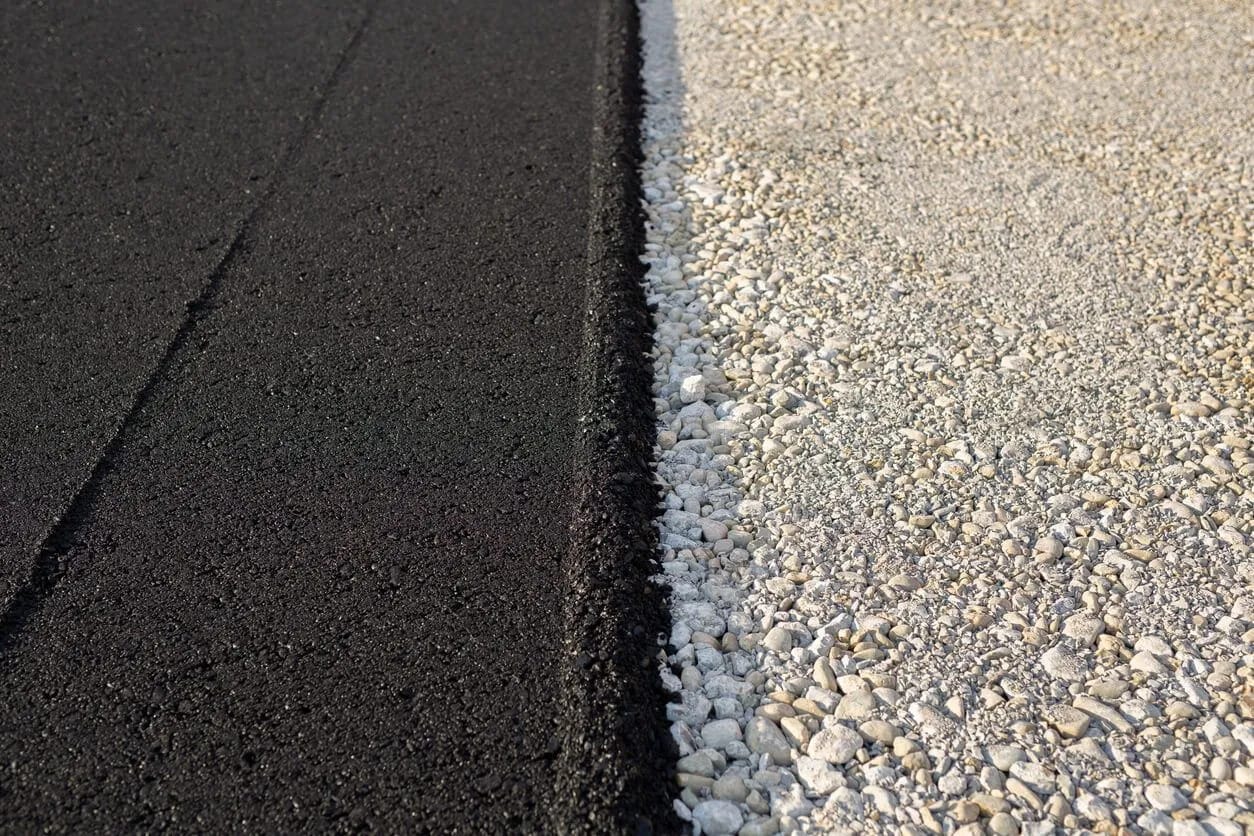
Precision Asphalt Charlotte performs commercial gravel to asphalt conversions in Charlotte, NC for parking lots, storage yards, and access roads. We regrade existing gravel, improve drainage, and build a compacted base before paving with hot mix asphalt. Converting gravel lots to asphalt reduces dust, mud, and maintenance while creating a professional surface for customers and trucks.
Precision Asphalt Charlotte provides professional commercial gravel to asphalt throughout Charlotte, NC, North Carolina and the surrounding area. Our licensed, insured crew delivers safe, clean, on-time work with a free estimate before anything begins. Call (704) 387-3626 or request your free quote.
Commercial Gravel-to-Asphalt Conversions for Charlotte Properties
If you manage a commercial property in Charlotte with gravel drives or parking areas, you already know the headaches: potholes after every storm, constant dust, and a surface that never quite looks professional. Precision Asphalt Charlotte specializes in commercial gravel-to-asphalt conversions that turn those high-maintenance gravel lots into durable, clean, and code-compliant asphalt surfaces built for Charlotte traffic and weather.
Our crew focuses strictly on paved solutions for businesses, so we understand the demands of retail centers, industrial yards, apartment communities, medical offices, churches, and office parks around Mecklenburg County. We design each conversion to handle the vehicle mix you see every day, from passenger cars and delivery vans to trash trucks and periodic tractor-trailer access.
A proper commercial gravel-to-asphalt project is much more than just dumping hot mix on top of existing stone. We start by evaluating soil conditions, drainage patterns, and the way your customers and trucks actually move and park on the property. Then we engineer the base and asphalt thickness to match those real-world conditions so you get a surface that holds up for years instead of one that starts cracking and rutting after the first summer.
Site Evaluation and Planning for Gravel-to-Asphalt Work
Every successful conversion begins with a detailed site assessment. When Precision Asphalt Charlotte visits your property, we look at three key factors: subgrade strength, drainage, and traffic patterns. Charlotte soils often include red clay that holds water, so we do not assume your existing gravel is a good base. We test how firm the underlying soil is and check for soft or pumping areas that will need undercutting or stabilization.
Next, we walk the site during or right after a rain whenever possible, or we look at existing washouts and ruts to understand where water wants to go. Many gravel lots around Charlotte and the surrounding towns (Huntersville, Matthews, Concord, Gastonia) have low spots near building entrances or at the back of the lot where water collects. We plan grading and drainage improvements during the conversion so that the new asphalt does not trap water against your building or create icy patches in the winter.
We also review how your lot is used. For a retail center, we focus on efficient car parking and pedestrian safety. For an industrial site, we pay attention to truck turning paths, loading dock approaches, and areas where forklifts cross from warehouse to yard. These details determine pavement thickness, base requirements, and striping layout, and they are essential for a long-lasting commercial gravel-to-asphalt conversion.
How Precision Asphalt Charlotte Converts Gravel to Asphalt
Once we have a plan in place, we move into the construction phase. On a typical commercial gravel-to-asphalt conversion in Charlotte, the work progresses in several clear steps.
First is stripping and rough grading. We remove any organic material and debris that has worked into the gravel over time, such as mud, old landscaping, or failed patches of concrete. Then we rough grade the existing stone to match the planned slopes so water will drain toward catch basins, swales, or the street, and not toward your building or sidewalks.
Second is subgrade repair and stabilization. Where we find soft spots, we undercut those areas by excavating the weak soil and replacing it with compacted crushed stone. For sites with very poor native soils or heavy truck use, we may recommend a geotextile fabric or stabilization grid between the subgrade and the stone base. This step is crucial in Charlotte’s clay soils, which lose strength when saturated.
Third is building or reconditioning the aggregate base. We typically install and compact ABC stone (aggregate base course) to a specified thickness, often in multiple lifts. Even if you already have gravel, it is rarely uniform or properly compacted for commercial asphalt loading, so we treat the base as a structural layer that must meet compaction standards. We test and rework it until it meets those requirements.
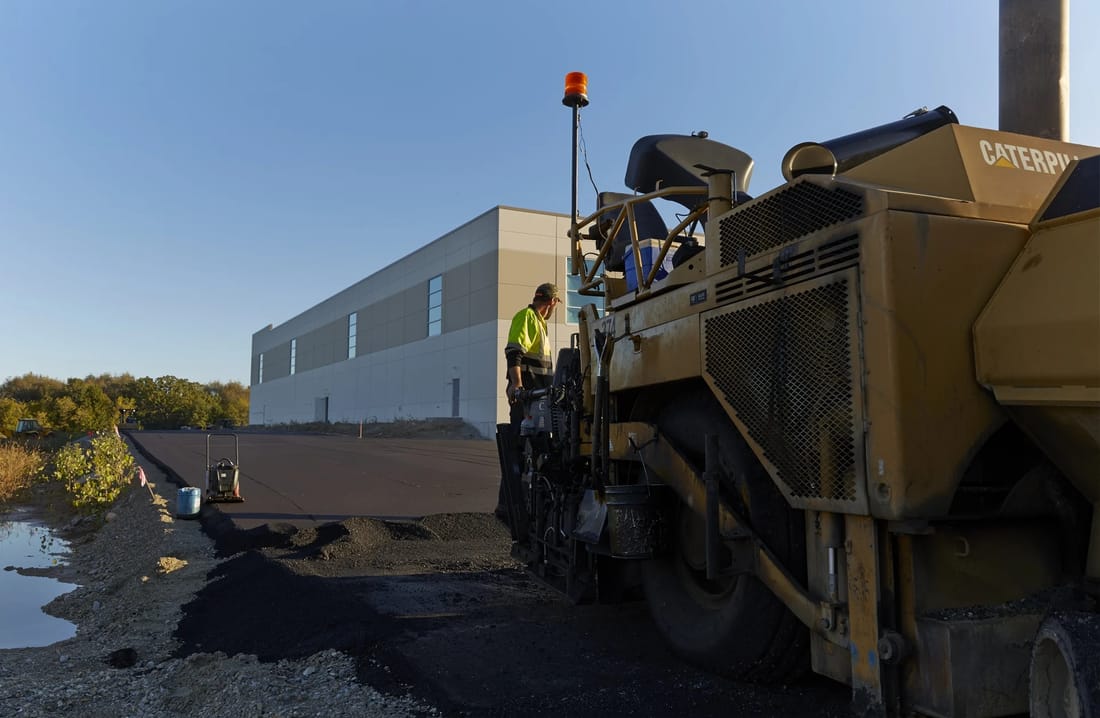
Finally, we install the asphalt in one or more lifts. For commercial gravel-to-asphalt conversions, we generally use a stronger base or binder course topped with a finer surface mix. The exact thickness depends on use, but a multi-lift structure gives much better long-term performance than a thin single layer placed over marginal stone. We machine-pave wherever possible for a smooth, even mat, then compact with steel drum and pneumatic rollers for density and long-term durability.
Asphalt Mix, Thickness, and Layout Options for Commercial Lots
Commercial gravel-to-asphalt projects are not one-size-fits-all. Precision Asphalt Charlotte selects asphalt mixes and pavement thickness based on your site’s loading, budget, and expected lifespan.
For light-duty parking lots that primarily see passenger vehicles, we typically recommend a well-compacted stone base topped with 2.5 to 3 inches of asphalt in two lifts. For mixed-use lots that see delivery trucks and occasional heavy vehicles, we may increase total asphalt thickness to 4 inches or more and tighten compaction tolerances. For heavy truck yards, dumpsters, and loading dock approaches, we often design localized thicker sections or stronger base materials so those high-stress zones do not fail prematurely.
You also have choices in layout features. During conversion, it is cost-effective to adjust drive aisles, add or reconfigure parking rows, and plan clear fire lanes based on current codes in Charlotte. We often include concrete aprons at dumpster pads, around compactors, or right at the loading docks, with asphalt tying into those areas. This hybrid approach provides durability where trucks pivot and scrape while keeping overall costs lower than full concrete.
If your property needs ADA-compliant parking, we set grades carefully around accessible spaces and routes to meet slope requirements before paving. Once the asphalt cures, we handle striping, wheel stops if requested, and signage so your converted lot is ready for use and inspection.
Managing Drainage, Dust, and Other Common Gravel Lot Problems
The biggest reason many Charlotte property managers move from gravel to asphalt is recurring maintenance. Gravel lots generate dust that drifts onto storefront windows and inventory, erode during thunderstorms, and develop washboard ruts that customers complain about. A properly designed asphalt conversion addresses these chronic problems.
During design, Precision Asphalt Charlotte pays close attention to how runoff moves across your site. For existing gravel lots with chronic puddles, we correct grades and, where necessary, add or adjust catch basins, valley gutters, or swales. We tie the new asphalt to existing drainage structures at proper elevations, and we use saw-cut joints when tying into public streets or older asphalt to prevent future cracking.
Another common concern is managing elevation changes. Gravel surfaces may be higher or lower than adjacent concrete sidewalks, loading docks, or thresholds. Before paving, we plan transition slopes and, when needed, replace small sections of concrete so the finished asphalt surface is smooth and safe, without tripping hazards or steep lips.
To minimize disruption to your business, we usually phase larger gravel-to-asphalt conversions so you always maintain some level of parking or access. For retail and medical offices, we often work in sections and schedule the most intrusive steps early in the morning or on weekends to limit the impact on customers and patients.
Cost Drivers and What Affects Your Gravel-to-Asphalt Price
Commercial gravel-to-asphalt conversions vary widely in price, even within the Charlotte area, because several technical factors drive cost. Precision Asphalt Charlotte explains these up front so you can plan a realistic budget.
The first driver is subgrade and base condition. If your existing gravel is thin, contaminated with mud, or sitting on soft clay, we need more excavation, stone, and stabilization, which adds cost but also prevents premature failure. Conversely, a thick, well-drained existing stone base can sometimes be reused with less new material, which can reduce costs.
The second driver is overall pavement thickness and the percentage of heavy-vehicle traffic. Lots that see box trucks a few times per week can often be designed more economically than yards that handle daily tractor-trailer traffic or container storage. The more structural strength required, the more base and asphalt we need.
Drainage improvements and concrete work are additional cost items. Adding new catch basins, storm pipe, or concrete dumpster pads will increase the project cost but can be crucial in solving long-standing issues and preventing damage to buildings and asphalt. We often provide alternate options, for example a basic conversion versus a comprehensive drainage upgrade, so owners can phase improvements.
Timing also affects price. Coordinating with your slow season or planned tenant turnover can save on business disruption costs, especially for multi-tenant properties. If you are in Charlotte, Matthews, or Huntersville and are planning future building additions or utility work, tell us in advance so we can sequence paving around that and avoid cutting into new asphalt later.
What to Expect When You Hire Precision Asphalt Charlotte
From the first visit through final striping, our goal is a straightforward process with no surprises. For a typical commercial gravel-to-asphalt conversion in the Charlotte area, you can expect an initial site walk and conversation about how your property is used and what problems you want solved, followed by a detailed proposal with scope, phasing, and clear pricing.
Before work starts, we confirm staging areas for equipment and materials, discuss how traffic will be rerouted during each phase, and review where deliveries and emergency vehicles will enter while sections of the lot are closed. We coordinate with on-site managers and, when needed, provide simple site maps you can share with tenants or staff.
During construction, our superintendent is your single point of contact. We keep you updated on progress, weather delays, and any hidden conditions we uncover, such as undocumented underground structures or unsuitable soils. If we encounter something that truly changes the scope, we stop, explain the options on-site, and document any approved changes before proceeding.
At completion, we walk the project with you, confirm drainage behavior, inspect joint transitions, and go over recommended curing times before heavy use. We also provide maintenance guidance specific to your new asphalt surface, including when to schedule initial sealcoating, how to handle de-icing during winter in the Charlotte region, and what loading limits to respect in the first weeks. The result is a commercial gravel-to-asphalt conversion that not only looks professional but performs reliably for years.