Home › Commercial Asphalt Resurfacing & Overlays
Precision Asphalt Charlotte specializes in commercial asphalt resurfacing in Charlotte, NC, renewing tired parking lots and drives without full reconstruction. Our team evaluates your pavement and recommends an asphalt overlay or mill and overlay solution that corrects drainage and surface defects. This approach restores a smooth blacktop surface, extends pavement life, and reduces long term maintenance costs for your property.
Precision Asphalt Charlotte provides professional commercial asphalt resurfacing throughout Charlotte, NC, North Carolina and the surrounding area. Our licensed, insured crew delivers safe, clean, on-time work with a free estimate before anything begins. Call (704) 387-3626 or request your free quote.
Commercial Asphalt Resurfacing & Overlays in Charlotte, NC
Commercial asphalt resurfacing is often the most cost‑effective way to turn a cracked, faded lot or drive lane into a clean, smooth surface without tearing everything out. At Precision Asphalt Charlotte, we focus on resurfacing and overlays for office parks, shopping centers, churches, industrial sites, HOAs, and medical facilities throughout the Charlotte area.
Resurfacing means we keep the existing asphalt base that is still structurally sound, repair what is failing, then install a new asphalt layer on top. An overlay usually ranges from 1.5 to 3 inches thick, depending on traffic loads and the condition of what is underneath. If your lot is alligator cracked in a few areas, holds water after storms, or has old patches everywhere but still feels solid when trucks roll over it, you are likely a candidate for commercial asphalt resurfacing instead of full reconstruction.
Charlotte has real temperature swings and frequent heavy rains, so local experience matters. Our crews are used to working around afternoon thunderstorms, clay subgrades, and the rutting that happens where tractor‑trailers turn into loading bays. We evaluate all of that before recommending resurfacing, so you do not spend money on an overlay that will just mirror every problem below it a year later.
How We Evaluate Your Pavement For Resurfacing
Before we price or schedule commercial asphalt resurfacing, Precision Asphalt Charlotte performs a site walk with a structured checklist. We look for specific items that tell us if resurfacing will actually hold up or if some sections need deeper repair.
First, we probe soft spots. Using a core sample or a simple steel rod, we test areas with severe cracking, standing water, or rutting. If the base rock has pumped out or turned to mud, that section needs full‑depth repair, not just an overlay. Next, we map drainage patterns. We pay attention to where water runs after a Charlotte downpour, especially near loading docks and handicap ramps. Low spots may require milling to remove material and set new slopes, or we install small valley gutters so water does not sit and destroy the new surface.
We also measure existing asphalt thickness at a few key points. Older lots in Charlotte are often only 2 to 3 inches thick. If we add another 2 inches of overlay in front of door thresholds, dock plates, and transition points to city streets, we have to adjust grades or mill those areas so you do not end up with trip hazards or steep lips. Finally, we review traffic patterns. A retail center with constant passenger cars can use a slightly different mix and thickness than a warehouse park with tandem axle trucks, forklifts crossing, and frequent deliveries. That traffic profile directly determines what overlay design we recommend.
Step‑by‑Step Commercial Asphalt Resurfacing Process
Once we confirm that resurfacing is appropriate, Precision Asphalt Charlotte follows a predictable, job‑tested sequence. This keeps your commercial site usable as much as possible while still giving the new overlay the best chance of a long life.
1. Site preparation and planning. We coordinate phasing with you so customers, tenants, or trucks still have a way in and out. For busy Charlotte retail sites, we often schedule work in segments and push heavier operations to evenings or weekends. We post closure maps and set cones, barricades, and signage so nobody is surprised.
2. Cleaning and edge work. Crews use brooms, blowers, and in many cases mechanical sweepers to remove dust, dirt, and loose rock. We pay special attention to curb lines and drains because that is where debris hides. If the overlay is tying into city streets or alleys, we cut a straight edge so the new asphalt finishes cleanly and does not feather into crumbling material.
3. Structural repairs and milling. Any potholes, alligator cracking, or failed areas are cut out square, typically 4 to 12 inches deeper than the existing surface, then rebuilt with new base and asphalt. Where we need to keep elevations the same, such as at ADA ramps or loading docks, we mill down the old asphalt to make room for the overlay thickness. In Charlotte, many older lots have ponding along curb lines, so we often mill shallow swales to direct water to existing inlets.
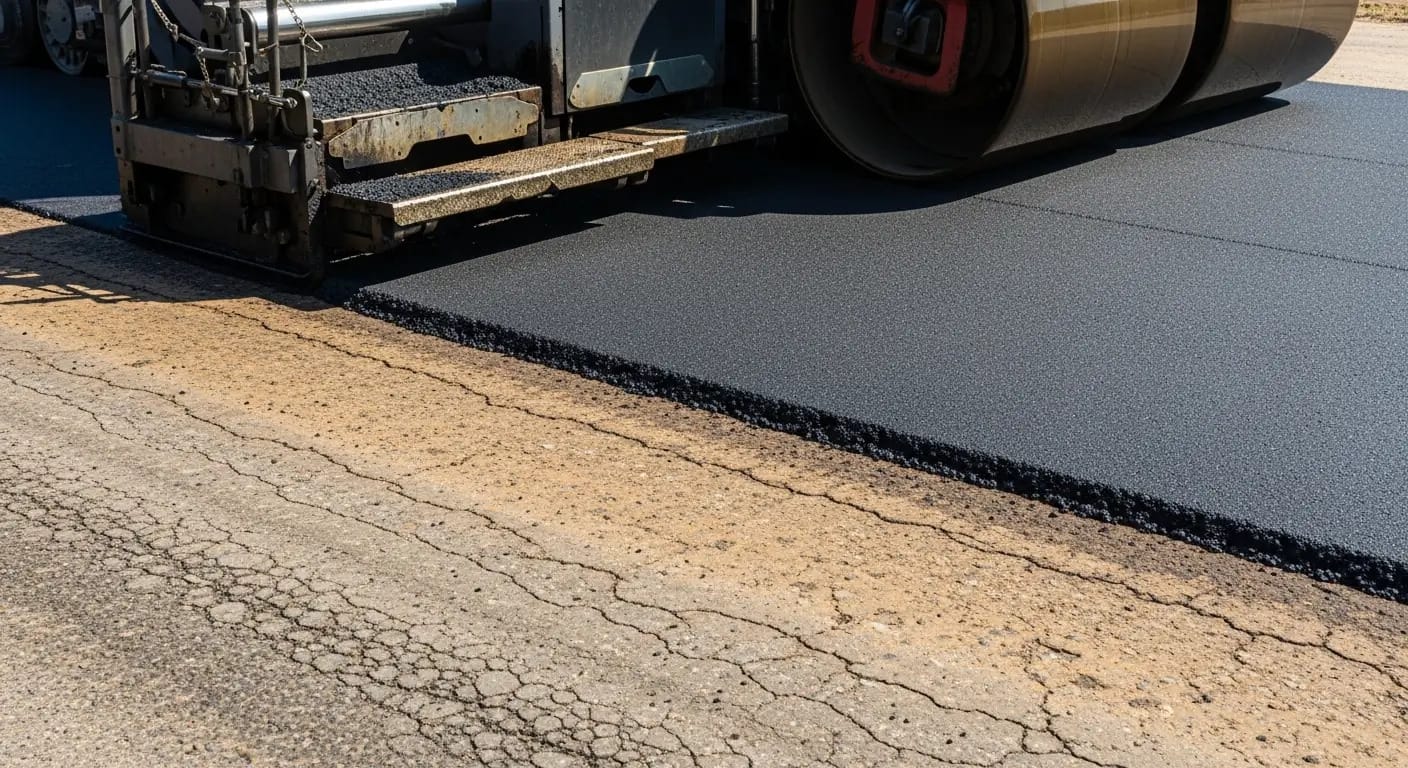
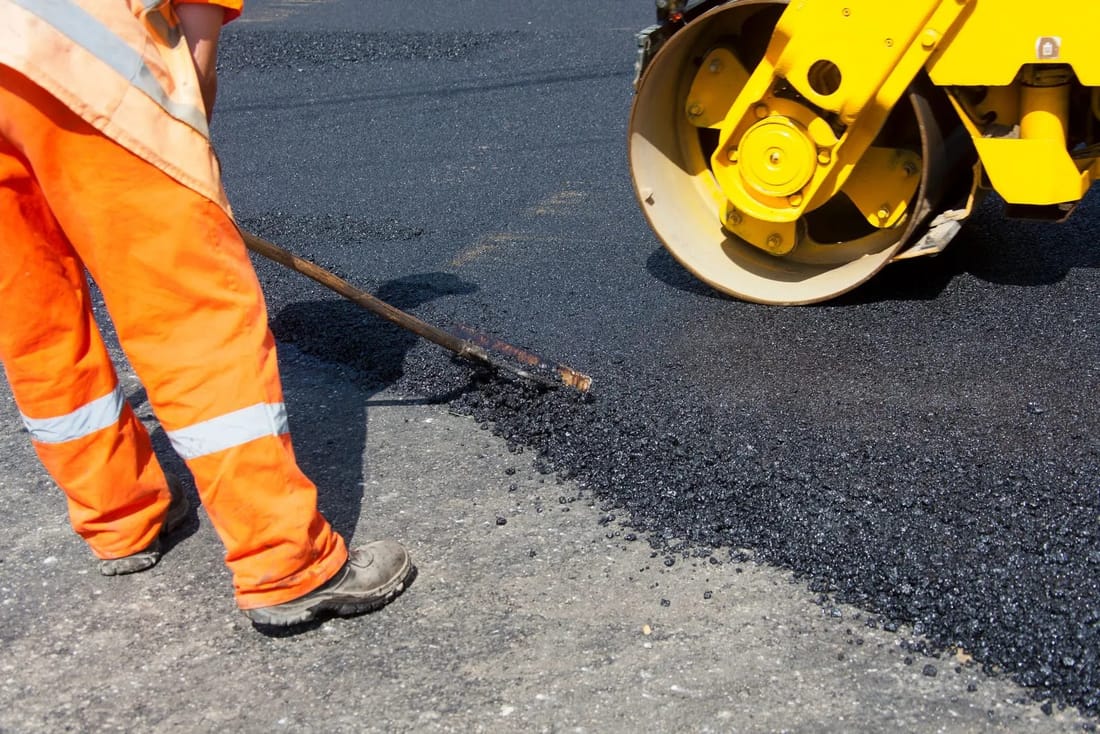
4. Tack coat and asphalt placement. After the pavement is clean and dry, we apply a tack coat, a thin application of asphalt emulsion that bonds the old surface to the new overlay. We then place the overlay with a paver for consistent thickness and grade. For most commercial work we use a 1.5 to 2 inch compacted lift for cars and light trucks, and up to 3 inches in dock aprons or truck lanes.
5. Compaction and finishing. Steel drum rollers and pneumatic rollers compact the new asphalt while it is still at the right temperature. Proper compaction is what prevents future rutting and shoving. We check joints between passes, adjust rolling patterns where trucks will turn sharply, and make sure transitions to concrete, manholes, or utility covers are smooth and safe. Once the mat has cooled, we return for layout and striping so stalls, fire lanes, crosswalks, and directional arrows are crisp and code compliant.
Design Choices, Materials, and Cost Factors
Commercial asphalt resurfacing is not a one‑mix‑fits‑all job. Precision Asphalt Charlotte selects mixes and designs based on how the pavement will actually be used and on local conditions.
For light‑duty parking areas, such as office buildings and churches, we typically use a finer surface mix that compacts tightly and looks smooth. For heavy truck traffic, like distribution centers along the I‑85 and I‑77 corridors, we use a coarser, stronger mix with more stone to resist rutting and shearing where trucks brake and turn. In shaded areas or spots that stay wetter after rain, we may recommend a slightly different binder grade to handle moisture and temperature swings.
Overlay thickness is another design choice with a big impact on cost and performance. Thicker overlays last longer but add weight and elevation. If your lot is already close to sidewalk or threshold heights, we may recommend a combination of milling plus a moderate overlay instead of simply adding a thick layer everywhere. Sometimes we use a leveling course, a thin asphalt layer that corrects waves and low spots, then install the final surface course on top.
Key cost drivers include how much milling is required, the number and size of full‑depth repairs, total square footage, required thickness, and how complex traffic control needs to be. A straightforward open lot in south Charlotte with mostly car traffic costs less per square foot than a tight uptown site where we have to coordinate with parking decks, loading docks, and city inspectors.
We also talk upfront about future maintenance. A quality overlay can later receive sealcoating and crack sealing on a regular cycle to extend its life. When we design a resurfacing project, we plan for that maintenance path so you get 12 to 20 years of service instead of 5 to 7. Being clear about traffic, budget, and long‑term plans helps us suggest the most practical resurfacing option for your property.
Local Issues, Common Problems, and What To Ask Before You Hire
Charlotte commercial lots deal with several recurring issues: clay‑based subgrades that hold water, summer heat that softens underdesigned asphalt, and winter freeze‑thaw cycles that open up cracks. Precision Asphalt Charlotte has seen overlays fail early when contractors ignored these local conditions.
Typical resurfacing problems include reflective cracking, which is when old cracks reappear in the new overlay. We reduce this by properly repairing or milling out the worst cracks, using a leveling course where needed, and making sure joints are tight and well compacted. Another issue is poor drainage. If an overlay is placed without correcting low areas, water will still pond and eventually break down the new surface. This is why we use laser or stringline checks on long runs and pay close attention to how water flows after a storm.
For Charlotte properties that see a lot of delivery trucks, one common failure is rutting at dumpster pads and dock approaches. In many cases, those areas should be converted to heavy‑duty asphalt or even concrete rather than simply overlayed with the rest of the lot. We will tell you honestly when a section needs a different solution so you do not keep resurfacing the same failed spot every few years.
Before you hire anyone for commercial asphalt resurfacing, ask a few direct questions. Ask how they will handle drainage corrections, not just cosmetic fixes. Ask what thickness they are quoting and whether that is compacted thickness or loose. Ask how they will phase the job to keep your tenants or customers open. Finally, ask to see examples of resurfacing work at other Charlotte properties that are at least 3 to 5 years old, not just brand‑new photos.
Precision Asphalt Charlotte is based here, works here, and stands behind our overlays because we know exactly what local weather, traffic, and soils do to pavement over time. If you want a resurfacing project that looks good now and still performs years from today, we start with a thorough evaluation, explain your options clearly, and match the overlay design to how your site really operates.