Home › Asphalt Striping and Pavement Markings
Precision Asphalt Charlotte provides asphalt striping in Charlotte, NC so your parking lots are safe, organized, and code compliant. We design efficient layouts and apply bright pavement markings for stalls, handicap spaces, fire lanes, arrows, and loading zones. Our parking lot striping services use durable traffic paint and precise equipment to deliver clean, sharp lines that stand out on your asphalt.
Precision Asphalt Charlotte provides professional asphalt striping throughout Charlotte, NC, North Carolina and the surrounding area. Our licensed, insured crew delivers safe, clean, on-time work with a free estimate before anything begins. Call (704) 387-3626 or request your free quote.
Practical Asphalt Striping Services for Charlotte Properties
Asphalt striping is not just paint on pavement. It is how you control traffic flow, meet ADA and fire code rules, and keep drivers and pedestrians out of each other’s way. Precision Asphalt Charlotte focuses on striping that actually works in real conditions around Charlotte, NC, including heavy summer sun, afternoon thunderstorms, and fluctuating winter temperatures.
We handle small retail lots, large commercial centers, office parks, industrial sites, HOAs, schools, and churches. Whether you need a first layout on new asphalt or re-striping on a faded lot, we start by looking at how your property is really used: where drivers actually cut across, where trucks swing wide, and where pedestrians walk. The layout we propose is based on those observations, not just a generic template.
Our team is familiar with Charlotte code requirements and common insurer expectations for parking layouts, fire lanes, and accessible parking. When you hire Precision Asphalt Charlotte, you get striping that looks sharp but also holds up, drains correctly, and is laid out so delivery trucks and larger vehicles can maneuver without constant curb hits and pavement damage.
How Our Striping and Marking Process Works
A clean, dry surface is critical if you want striping that does not peel within a year. We start by sweeping the pavement with mechanical sweepers, then blow off fine dust and debris using backpack blowers. For greasy or oil-soaked areas, especially in restaurant and convenience store lots, we pre-treat with a degreaser and may lightly abrade or wire-brush the surface so the paint bonds to asphalt rather than to loose contamination.
Next we snap chalk lines or use laser-guided striping machines to establish straight runs and correct spacing, based on required stall dimensions and drive aisle widths. For new layouts we often mark positions in chalk first so your manager can walk the site and confirm counts and placements before anything goes down permanently.
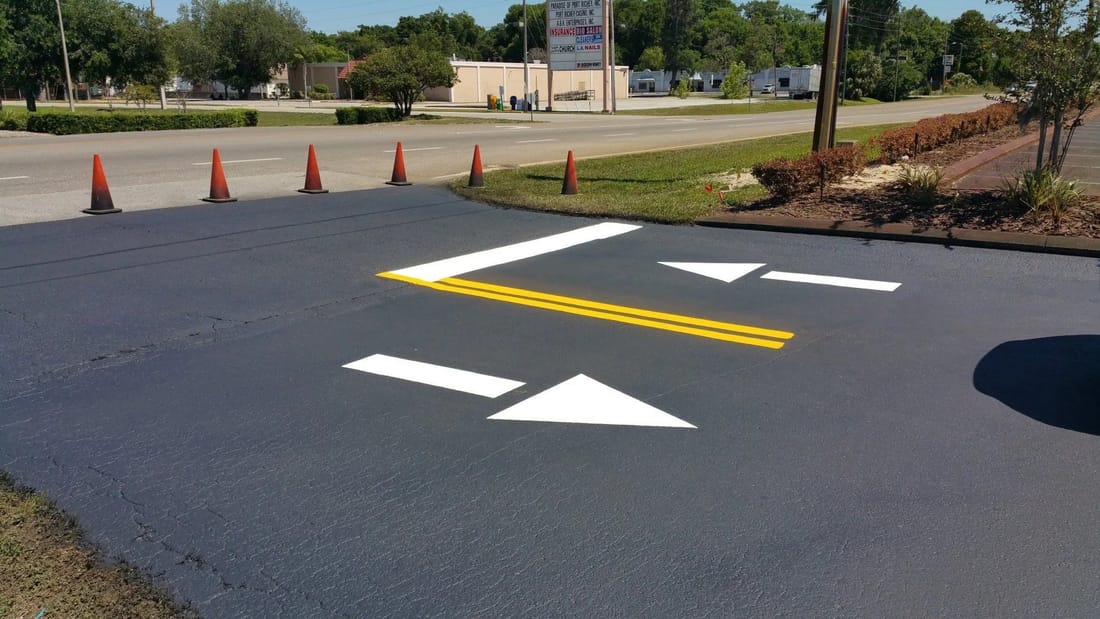
We typically use high quality waterborne traffic paints designed for asphalt, applied with adjustable line stripers. These machines control line width, thickness, and paint output so the lines are consistent from the first stall to the last. For stencils (handicap symbols, arrows, numbers, EV icons, and custom logos), we tape and block surrounding areas to avoid overspray, then apply multiple light coats instead of one heavy coat to reduce runs and maintain sharp edges.
On high wear locations like stop bars at busy exits or loading zones where trucks constantly turn, we increase the paint mil thickness and may recommend adding glass beads or using more durable material so the markings remain visible longer. Once painting is complete, we place cones and barricades, then coordinate with you on reopening times based on temperature and humidity.
Layout Design, Compliance, and Safety Markings
Good asphalt striping starts with the design, not the paint. Precision Asphalt Charlotte reviews traffic patterns, property access points, and likely pedestrian paths before finalizing a layout. For existing lots we can often improve circulation simply by resizing a few stalls, shifting crosswalks, or correcting confusing double-entry aisles.
We apply standard and compact parking stalls, accessible spaces, van-accessible stalls with access aisles, and loading zones sized to current ADA and local code guidelines. For multi-tenant retail centers, we verify stall counts and accessible space ratios so you are not short on code-required spaces. We clearly mark all required signage locations so your sign contractor or maintenance team can install matching posts and symbols.
Safety markings often include crosswalks at building entrances, yield and stop bars at internal intersections, and painted pedestrian routes from parking areas to main doors. In warehouse and industrial sites, we also stripe interior floors and exterior truck courts to show dock lanes, trailer parking, and pedestrian exclusion zones. For fire lanes we follow Charlotte fire code width and marking rules, including “No Parking Fire Lane” wording and curb painting where required.
If your property has EV charging, cart corrals, or pickup-only stalls, we incorporate those into the layout to avoid last-minute disorder. We can add numbered or labeled stalls for tenant assignment, call-ahead pickup, or employee parking, with lettering scaled to be readable from a vehicle.
Materials, Durability Options, and What Affects Cost
Most asphalt striping in Charlotte uses high quality waterborne traffic paint. It cures quickly in our climate and is cost effective for lots that may be re-striped every 18 to 36 months. For heavy traffic commercial centers, hospitals, and high visibility entrances, Precision Asphalt Charlotte also offers more durable options such as two-part epoxy or acrylic coatings and, where appropriate, thermoplastic markings for key areas like stop bars or crosswalks.
Material choice, existing pavement condition, and layout complexity are the main drivers of cost. A simple re-stripe following existing lines on a clean, lightly worn lot is the least expensive work. Costs increase when we must black out old markings, redesign the layout, or correct poorly placed lines and noncompliant accessible spaces. Severe oxidation, cracking, or raveling can require patching or sealcoating before striping so the paint has a solid base.
Custom stenciling, extensive directional arrows, reserved labels, numbering, and logos add time and materials. Tight schedules that require night or off-peak work, common for grocery-anchored centers and busy drive-thrus, also affect pricing because we staff differently and work around open business operations.
Before giving you a firm price, we walk the site, count stalls, note repairs that could impact performance, and ask how long you expect the markings to last. This helps us recommend a material and schedule that make financial sense instead of simply quoting the cheapest paint and hoping it holds up.
Local Timing, Weather, and Maintenance in Charlotte
Weather timing is a real factor for asphalt striping in Charlotte. Traffic paint cures best when pavement temperatures are above about 50 degrees and there is no rain in the forecast for several hours. In our area, the most reliable striping windows are typically March through early June and September through early November, when we have warm days, cooler nights, and fewer pop-up storms than midsummer.
Summer projects require more careful planning because dark asphalt can reach very high surface temperatures, which can cause paint to skin over too fast and not bond as well. In those months we often schedule work in the early morning or evening to avoid the hottest hours. In winter, we watch overnight lows and dew; if the pavement is damp or near freezing at sunrise, we may adjust start times to avoid poor adhesion.
Once striping is complete, routine maintenance helps extend its life. Keeping the lot swept, limiting the use of harsh de-icers, and repairing potholes or alligator cracking quickly will all reduce how often you need full re-striping. After a sealcoat project, all markings must be reapplied, so it often makes sense to coordinate sealcoating and striping together. Precision Asphalt Charlotte can plan that sequence for you so your lot is not disrupted twice.
For busy sites, we often set up a re-striping cycle based on actual wear patterns. For example, a shopping center may only need full-lot re-striping every two years, but the front row, drive lanes, and stop bars may need touch ups yearly.
What Charlotte Customers Should Ask Before Hiring a Striping Contractor
Not all striping contractors operate the same way. When you talk with anyone about asphalt striping in Charlotte, ask what specific paint or material they plan to use and whether it is rated for asphalt and for the traffic load on your property. Ask to see a sample layout plan, even a simple sketch, if they are changing your existing configuration.
You should also expect a clear traffic control plan. Precision Asphalt Charlotte explains how we will block areas, how traffic will flow while sections are closed, and when customers or employees can park again. This is especially important for 24 hour operations and facilities with critical access like medical offices or distribution centers.
Request references or examples of similar local work, such as a comparable size retail lot or office park. Check that the contractor understands ADA and fire lane marking rules, including signage, not just paint on the ground. If they do not mention stall width, access aisles, or required wording, that is a concern.
Finally, insist on a site walk before signing a proposal. This is where issues like poor drainage, crumbling edges, or conflicting existing markings are discovered. Precision Asphalt Charlotte uses this visit to flag repairs that should come first, confirm stall counts, and build a layout that fits how your Charlotte property is actually used, not just how it looks on a satellite image.