Home › Asphalt Pathways, Sidewalks, and Trails
Precision Asphalt Charlotte provides asphalt pathway paving in Charlotte, NC for parks, campuses, and commercial sites. We construct multi use trails, sidewalks, and walking paths with consistent width, slopes, and smooth surfaces for pedestrians and cyclists. Our asphalt paths and trail paving projects focus on accessibility, drainage, and long term durability in high traffic areas.
Precision Asphalt Charlotte provides professional asphalt pathway paving throughout Charlotte, NC, North Carolina and the surrounding area. Our licensed, insured crew delivers safe, clean, on-time work with a free estimate before anything begins. Call (704) 387-3626 or request your free quote.
Asphalt Pathways, Sidewalks, and Trails in Charlotte, NC
Asphalt pathways, sidewalks, and walking trails are different from driveways or parking lots. They need to be smooth underfoot, drain correctly, and connect to existing hardscapes without trip edges. At Precision Asphalt Charlotte, we focus specifically on how people actually use these paths in our local neighborhoods, parks, schools, and communities across the Charlotte area.
Our crews are used to working in tight residential backyards, HOA common areas, greenways, and campus settings. That means we plan access for equipment, protect turf and landscaping, and keep noise and disruption under control. Whether you need a short asphalt walkway from driveway to front door or a meandering trail around a retention pond, we match the project design to how you and your visitors move through the space.
Charlotte’s clay soils, summer storms, and occasional freeze-thaw swings make pathway design different here than in many other regions. We pay close attention to slope, base stone depth, and where water will go when it rains hard. Proper planning reduces puddles, edge breakup, and heaving, so your asphalt path stays safe to walk on for years instead of needing constant patching.
How We Design Your Asphalt Pathway or Trail
Before any work starts, we walk the route with you. For a residential pathway, we look at where you naturally walk now, how you push strollers or roll trash bins, and where a straighter or wider route would be safer. For HOA and commercial sidewalks or trails, we review access points, ADA considerations, and how the path ties into parking areas and building entrances.
We then discuss width and thickness. For light foot traffic, a 4 to 5 foot wide path typically works. For mixed use paths that may see bikes, golf carts, or maintenance vehicles, we often recommend 6 to 8 feet or more. Thickness usually ranges from 2 to 3 inches of compacted asphalt on top of a properly built stone base. Heavier use areas, such as near schools or park entrances, may need additional thickness.
Material choices matter as well. Charlotte gets hot in the summer, so we select asphalt mixes with the right binder content and aggregate size for pedestrian comfort and durability. For trails in shaded or damp areas, we may suggest a mix that resists raveling and surface wear. In some HOA and campus projects, we can adjust the surface texture slightly to give a more refined look, while still keeping it slip resistant.
Drainage and slope are critical. We design gentle cross slopes so water runs off the path but the surface still feels flat when you walk. On hillsides or around retention ponds, we plan where water will move and, if needed, integrate swales, small culverts, or tie-ins to existing drainage structures. These details make a big difference in long-term maintenance and safety.
Step by Step: Our Asphalt Pathway Paving Process
Once the layout is set, Precision Asphalt Charlotte handles everything from clearing the route to final striping if needed. The process begins with site preparation. We mark utilities, remove grass, roots, and soft soil, and cut any necessary transitions to existing concrete or asphalt. For wooded or overgrown areas, we carefully clear just enough width to install the path without damaging trees you want to keep.
Next, we build the base. For most Charlotte projects, this involves placing 4 to 8 inches of compacted crushed stone, depending on soil conditions and expected use. In areas with poor drainage or very soft clay, we may increase stone depth, use a different gradation, or install a geotextile fabric to stabilize the subgrade. The base is graded to the planned slope and compacted with vibrating rollers to reach the proper density.
After the base is ready, we place and compact the asphalt. We install the hot mix asphalt at the specified thickness, usually in a single lift for standard pathways. Our crew uses small pavers where access allows, or hand tools and compactors in tighter backyards and between buildings. We pay close attention to joints where new asphalt meets existing surfaces to avoid trip edges.
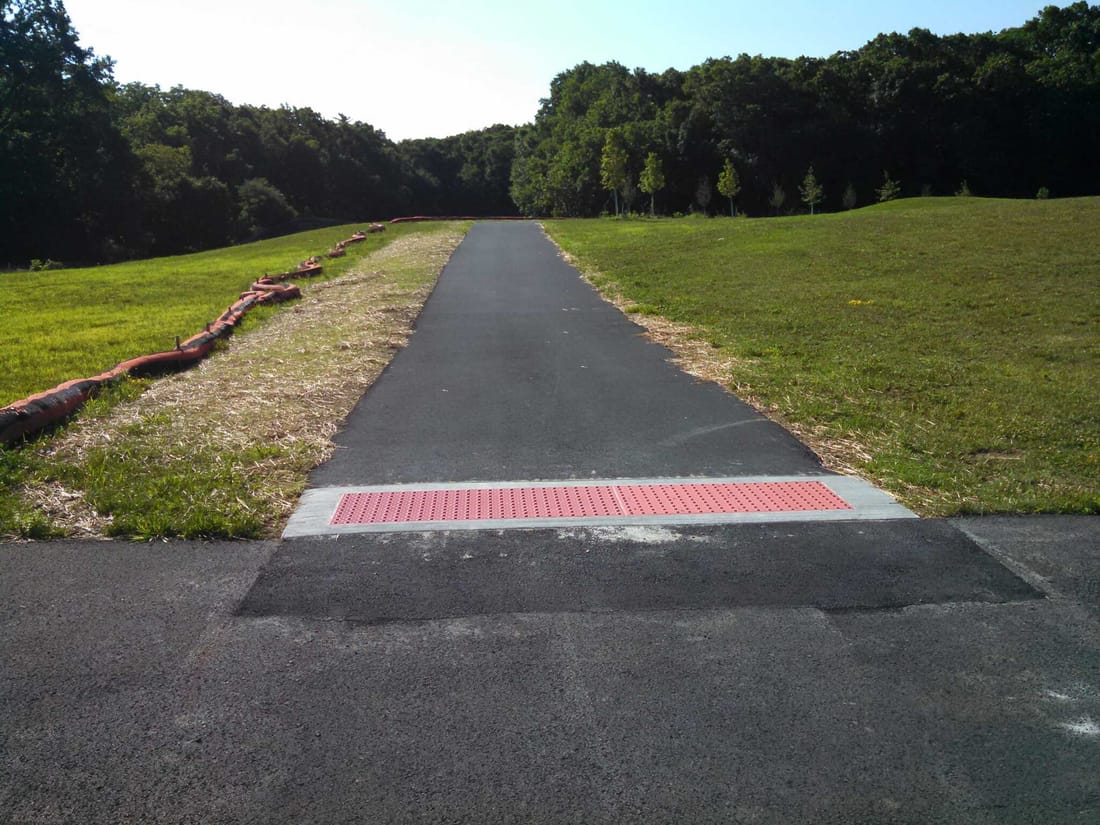
Finishing touches matter on pedestrian work. We feather the edges so you do not have abrupt drop-offs, and where needed, we recommend installing edge restraints or concrete ribbons to control edge cracking. For community trails, we can add simple markings, wayfinding arrows, or crosswalk tie-ins. After rolling and cooling, we check the path for smoothness and proper drainage before turning it over to you.
What Affects Cost for Asphalt Pathways, Sidewalks, and Trails
Customer budgets vary, so we explain clearly what drives your project cost. Length and width are the most obvious factors, but they are not the only ones. A long, straight path across relatively flat ground is more economical per foot than a short, winding path that requires hand work, retaining details, or extensive grading.
Site conditions in Charlotte play a major role. Soft or wet soil, heavy shade that keeps areas damp, or steep slopes all require more base stone, more equipment time, or drainage improvements. If trucks and machinery can reach the work area easily, labor is lower. If all materials must be moved through narrow gates or around buildings, we factor in the extra time and crew needed.
Material thickness is another cost driver. A backyard footpath that only sees people walking can often use a thinner section than a neighborhood trail that will carry golf carts, maintenance vehicles, or small utility equipment. We will not oversell thickness you do not need, but we will tell you when a thin section will not hold up.
Permits and accessibility requirements can also affect pricing for larger or commercial projects. In some parts of Mecklenburg County and the City of Charlotte, new sidewalks or public-facing trails must meet specific slope, cross slope, and landing standards. When these apply, we account for extra grading, forms, and layout work in the estimate so there are no surprises later.
Common Pathway Problems and How We Prevent Them
In the Charlotte area we see the same avoidable pathway issues over and over, usually on projects that were built too quickly or too cheaply. The most common problems are edge cracking, puddling, and settling. At Precision Asphalt Charlotte, our goal is to prevent those from the start, not just patch them later.
Edge cracking often comes from lack of support. If the base stone ends right at the path edge and the soil next to it is soft, the asphalt can start to crumble where feet, mowers, or carts ride the edge. To combat this, we extend and compact the stone base wider than the finished pavement. On high use edges, like near driveways or around community mail kiosks, we may recommend concrete or stone edging.
Puddles and slick spots come from poor grading. Even a small low area can hold water after one of our summer thunderstorms, and that accelerates wear. During construction, our crew checks slopes with levels and visual inspections, then corrects any dips while the asphalt is still workable. After compaction, we walk and water test suspect areas on longer paths.
Settling and heaving are usually tied to weak subgrade or trapped water. On clay soils, we are careful not to work them when saturated because that can pump and create soft zones beneath the path. Where we suspect future movement, we may recommend undercutting and replacing weak soils with stone, or using a fabric separator. These steps cost a bit more up front but greatly reduce the risk of future trip hazards and patchwork repairs.
Why Work With Precision Asphalt Charlotte
Local experience matters for pathway, sidewalk, and trail work. Precision Asphalt Charlotte is based here, so we know which neighborhoods sit on heavier clay, which areas tend to stay wet after storms, and how local inspectors interpret sidewalk and trail requirements. That insight helps us design paths that hold up in actual Charlotte conditions, not just on paper.
Communication is just as important as the technical work. We provide clear start and finish timelines, explain how long you should keep people or pets off the new surface, and coordinate with HOA boards, property managers, or tenants when needed. On school, church, or park projects, we often phase work to keep certain access routes open and safe.
We also stand behind the details. If we see a layout choice that will cause long-term problems, we will say so, even if it means revising the plan. Our crews treat pathways and trails as part of a larger landscape, so we protect lawns, irrigation, and plantings as we work. When we clean up, you should see a new asphalt path that looks like it has always belonged there.
If you are planning an asphalt pathway, sidewalk, or walking trail anywhere in the Charlotte, NC area, we are ready to walk the route with you, discuss options, and provide a detailed written proposal. You will know exactly what we recommend, what it costs, and why, so you can move forward confidently.